GEYER’S ONION
ALLIUM GEYERI
Onion Family, Alliaceae (formerly in the Liliaceae)
Perennial herb
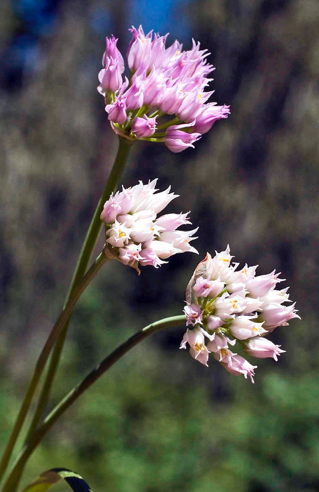
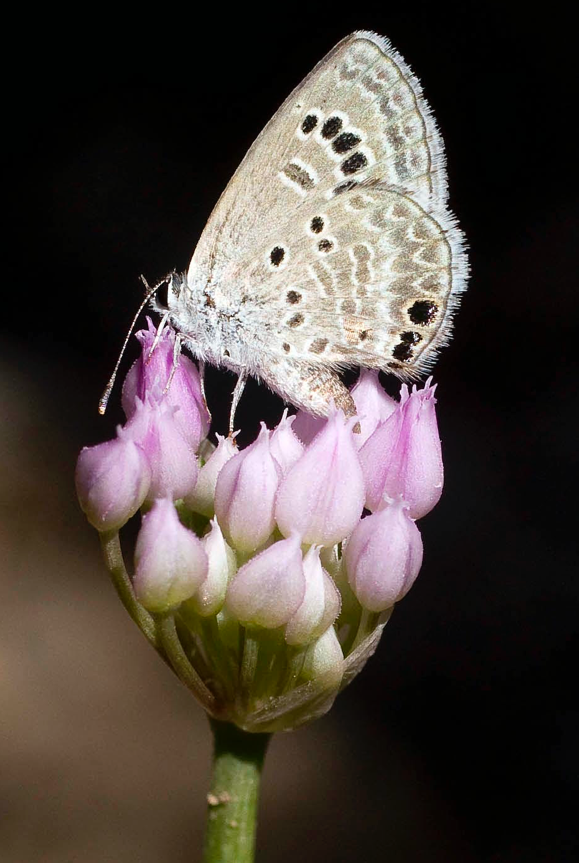
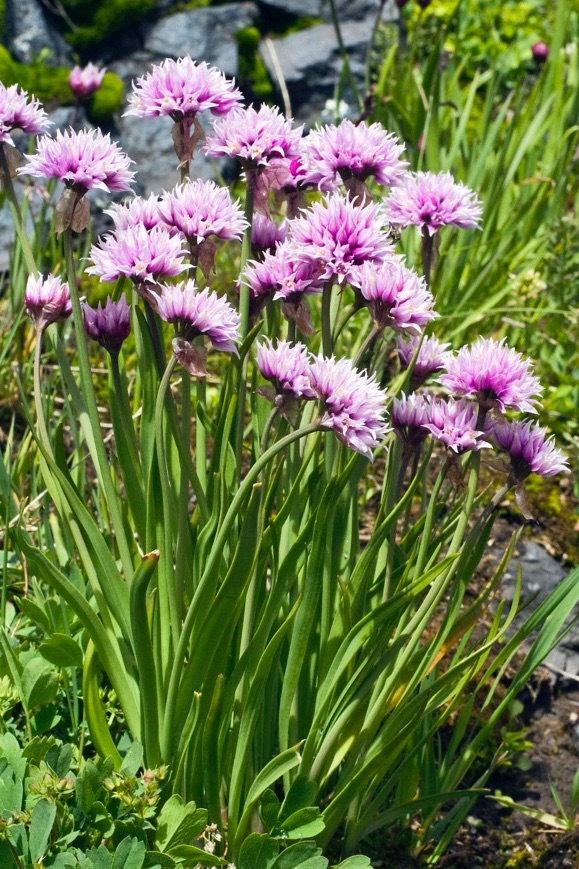
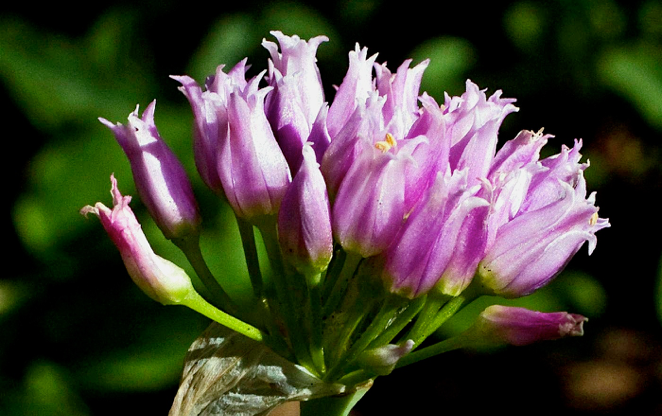
With grass-like leaves from a bulb and dense, erect clusters of pink to white, urn-shaped flowers on a solitary stem, this onion attracts numerous insects. Note the pink to white, upright flowers. In this species, the oval bulbs are covered with a network of coarse fibers. Blooms in summer.
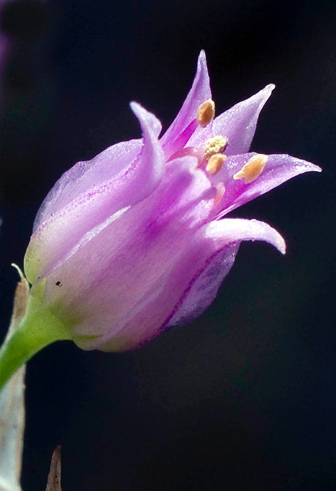
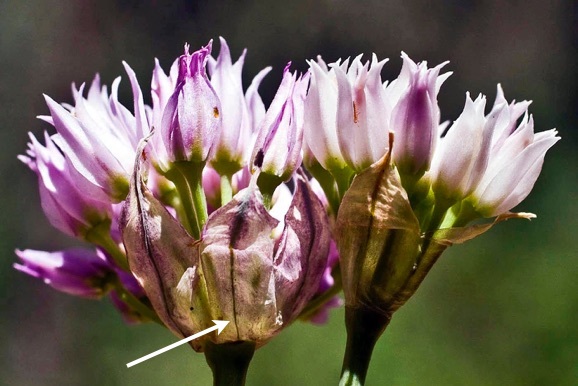
FLOWERS: May–July. A compact flat-topped cluster (umbel) with 10–25 small flowers blooms atop a 4–20-inch-tall (10–50 cm) stem (scape); flowers urn-shaped with 6 petals with pointed tips, stamens enclosed. Each papery bract below the flower cluster has 1 nerve. Bulbils (little bulbs) may or may not replace the flowers, depending on variety.
LEAVES: Basal, usually 3 per bulb. Blades 4 3/4–12 inches (12–30 cm) long, shorter than the flowering stem; grass-like, flat, solid (not hollow), slightly cupped to form a shallow channel.
HABITAT: Moist loamy, gravelly soils of mountain meadows, stream sides; from piñon-juniper woodlands to spruce-fir forests and alpine zone.
ELEVATION: 5,300–12,500 feet.
RANGE: AZ, CO, ID, MT, NM, NV, SD, TX, UT, WA, WY.
SIMILAR SPECIES: 2 varieties: var. geyeri, widespread, flowers do not form bulbils; var. tenerum, mostly subalpine zone, flowers form bulbils. Nodding Onion, A. cernuum, also in mountainous habitats, has nodding clusters of flowers. 12 species of onions in NM, many difficult to distinguish without bulb details.
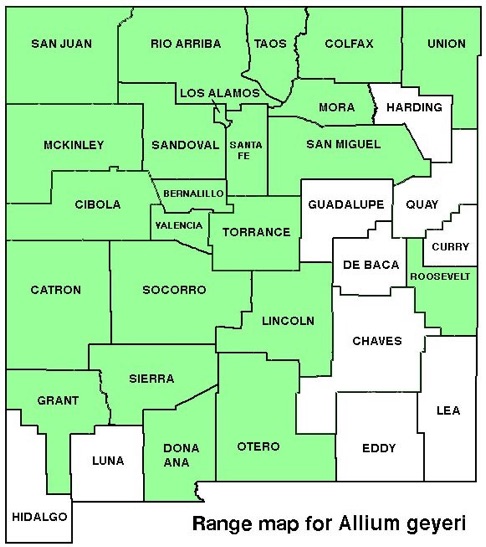
NM COUNTIES: Statewide in mid- to high-elevation, moist habitats except Boothill and eastern plains counties.