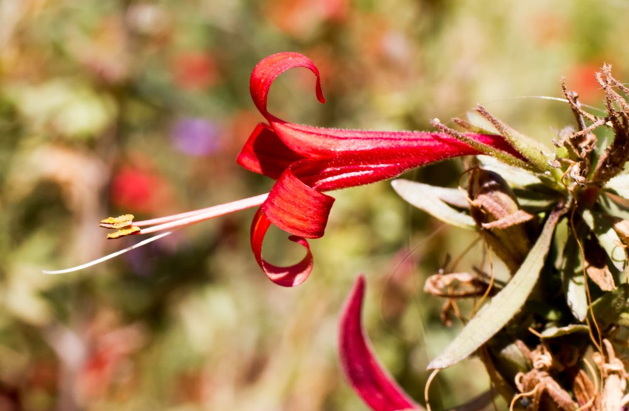
THURBER’S DESERT HONEYSUCKLE
ANISACANTHUS THURBERI
Acanthus Family, Acanthaceae
Deciduous shrub
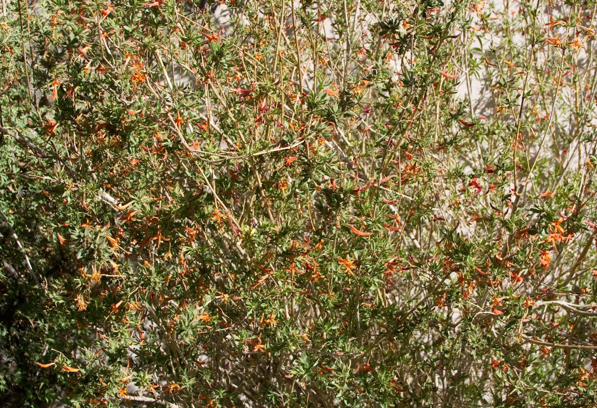
The showy tubular brick-red to red-orange flowers of this upright, spreading 3–6.5 foot tall and wide (1–2 m) shrub make it popular with hummingbirds and butterflies, and in home landscapes in the southern half of New Mexico and Arizona. The bark of the stout branches shreds with age.
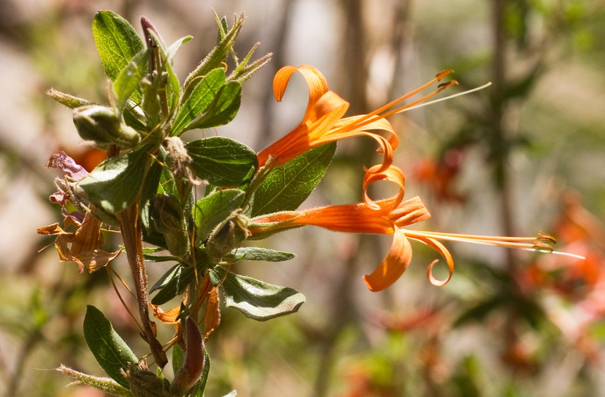
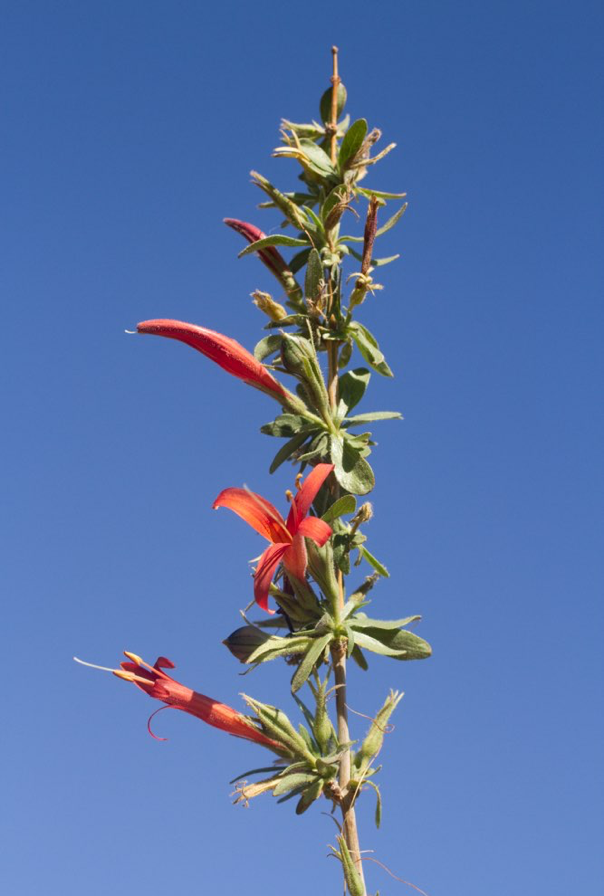
FLOWERS: Spring–fall, triggered by rain. Clusters of opposite pairs in leaf axils; flowers tubular, brick-red to orange-red, 1 1/4–1 5/8 inches long (3–4 cm) have 1 upper and 3 lower lobes that spread and curl backwards; 2 stamens red, 1 pistil white, both extend far beyond the flower throat, adapted for hummingbird pollination. The dried fruit capsule explodes, propelling the 4 seeds several meters away.
LEAVES: Opposite, clustered, on short stalks (petioles), winter deciduous. Blades narrow, lance-shaped, 1 5/8–2 3/8 inches long (4–6 cm); edges entire, surfaces smooth to sparsely hairy.
HABITAT: Riparian, floodplains, washes, canyons; desert grasslands and scrub.
ELEVATION: 4,000–7,200 feet.
RANGE: AZ, NM; Mexico
SIMILAR SPECIES: Firecracker Bush, Bouvardia ternifolia, in Hidalgo Co., southern AZ, and Trans-Pecos TX, has whorled leaves, clusters of narrow, tubular, scarlet flowers with small, pointed lobes, and stamens within the throat. Flame Acanthus, A. quadrifidus var. wrightii, native to west and south Texas, has broad-based lower leaves with tapering tips, and flowers with spreading lobes (not recurved). Both are used frequently in SW landscaping.
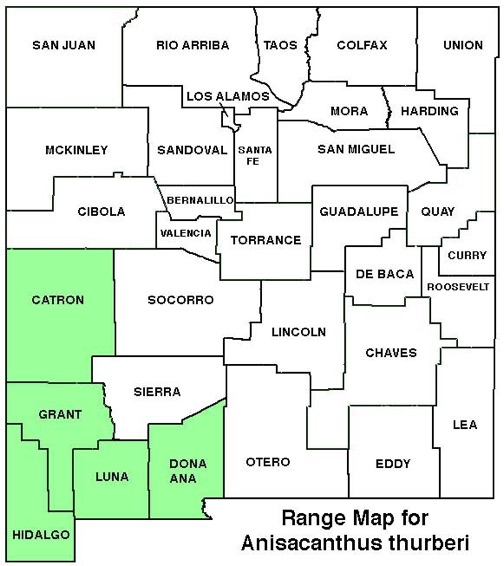
NM COUNTIES: Common to occasional in SW corner of NM in low-elevation, arid habitats; Catron, Doña Ana, Grant, Hidalgo, Luna.