KOCHIA
BASSIA SCOPARIA (KOCHIA SCOPARIA)
Amaranth Family, Amaranthaceae (formerly in the Chenopodiaceae)
Annual herb; naturalized, noxious invasive
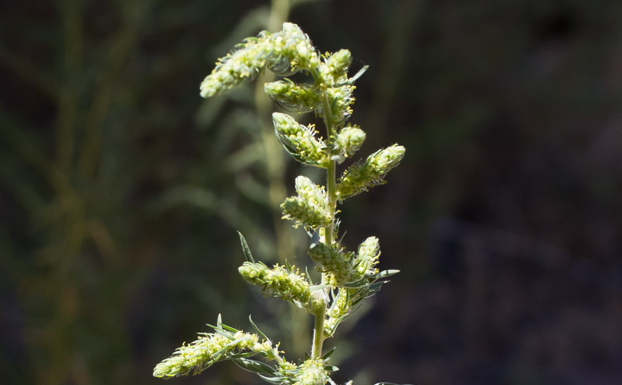
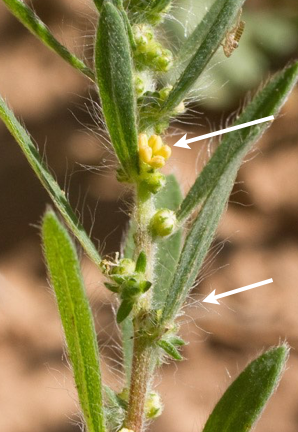
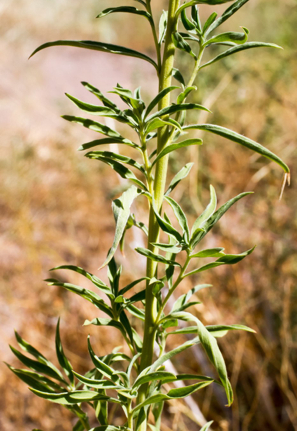
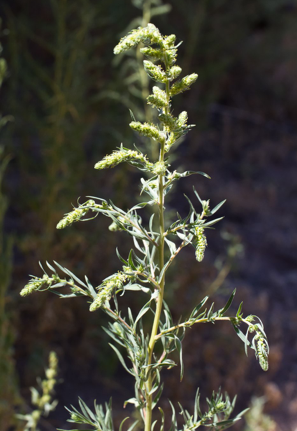
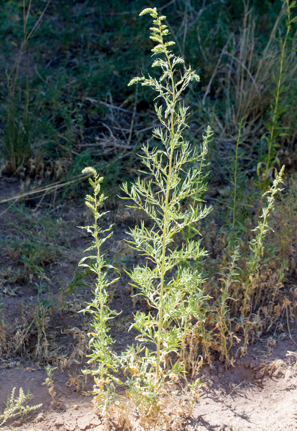
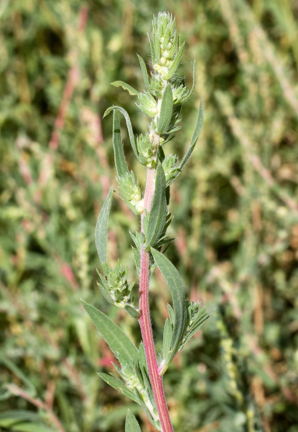
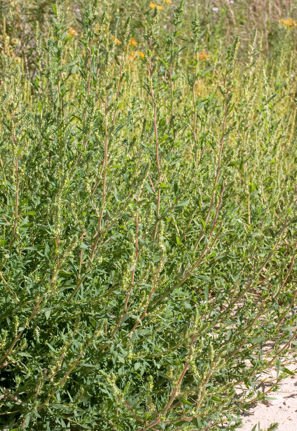
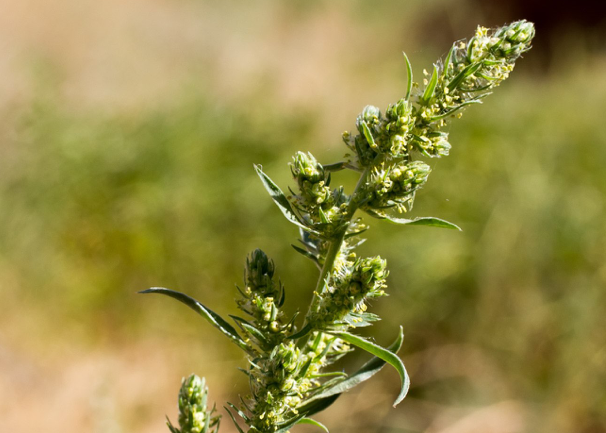
Introduced from Europe, this widespread invasive plant is a common weed throughout North America, especially in agricultural areas. The branching stem reaches 2–5 feet tall with a deep tap root to capture water. Mature stems have long hairs and often turn reddish. Note the slender, hairy leaves, and the tiny, greenish-yellow flowers in spikes at branch tips and from leaf axils. This noxious plant will displace native plant species and the pollinators and birds they support with dense, impenetrable stands.
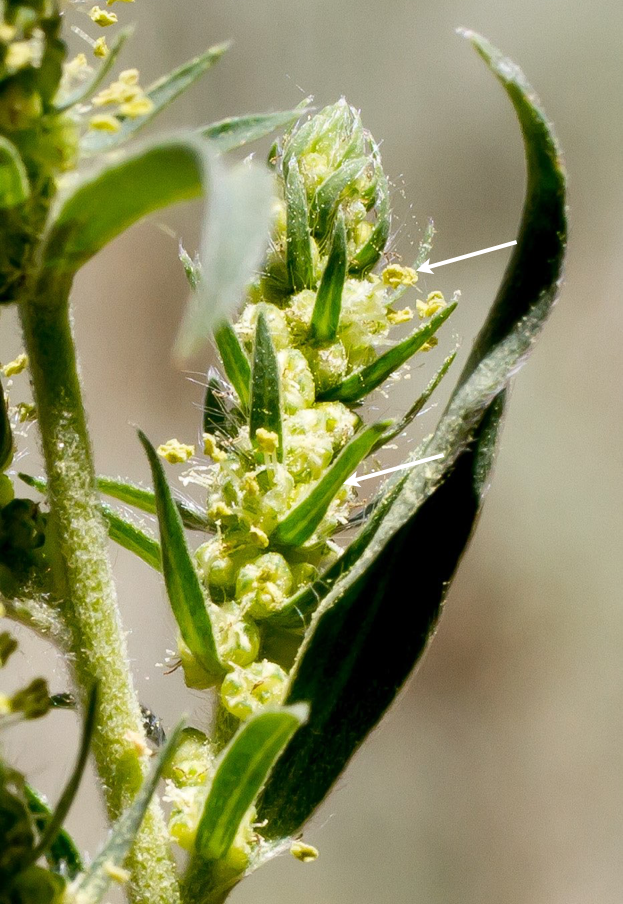
FLOWERS: June–October. Spikes are long-hairy (not woolly); flowers tiny, greenish, stalkless with no petals and 5 protruding stamens; short, leaf-like bracts grow in the spike beneath each flower.
LEAVES: Alternate. Blades linear to lance shaped, flat, thin, 3/4–4 inches long (2–10 cm) to 1/2 inch wide (12 mm); margins entire, surfaces with soft hairs.
HABITAT: Seasonally moist sandy, silty, clay soils; croplands, pastures, riparian, ditches, roadsides, disturbed areas; sagebrush, chaparral, grasslands, piñon-juniper woodlands, mixed conifer forests.
ELEVATION: 3,700–9,000 feet.
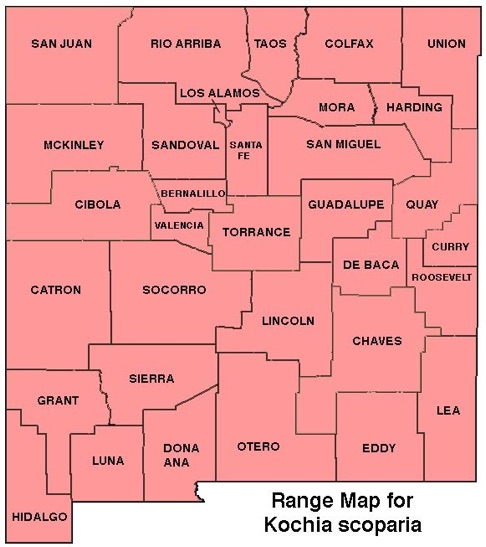
RANGE: Widespread throughout United States, especially in the SW.
SIMILAR SPECIES: The introduced Five-horn Smotherweed, Bassia hyssopifolia, in the four-corners and Rio Grande valley, has flower spikes covered with woolly hairs, and the sepals around the seeds have a tiny, hooked dorsal spine.
NM COUNTIES: Common statewide in low, mid, and high-elevation habitats in seasonally moist soils.