POISON HEMLOCK
CONIUM MACULATUM
Parsley Family, Apiaceae
Biennial herb, introduced, naturalized
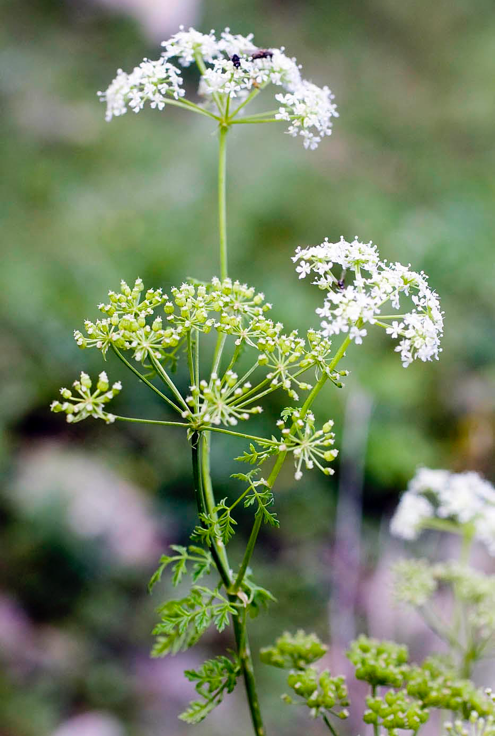
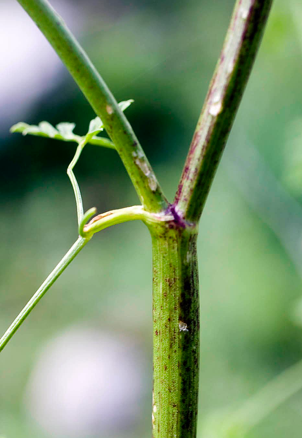
Erect, many-branched stems can reach 10-feet tall with reddish purple spots or streaks, and leaves that look like a giant parsley. Note the spotted stem, umbrella-shaped clusters of tiny, white flowers, and wet habitat. Introduced from Europe, widely naturalized.
NOTE: All parts of this robust, water-loving plant are DEADLY POISONOUS, especially the stem and leaves. Even skin contact can cause dizziness and nausea; eating can cause central nervous system failure.
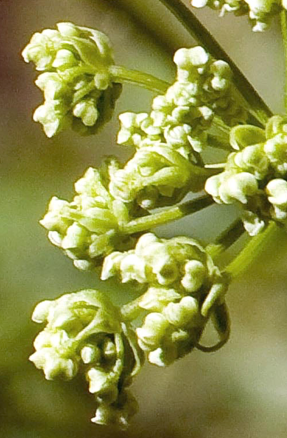
FLOWERS: May–August. Umbrella-shaped clusters (umbels) with radiating rays, each ray tipped with a smaller, round umbel of tiny, white flowers with 5 petals. Note the smaller flower umbels have several tiny, lance-shaped, leaf-like bracts at the base of the rays.
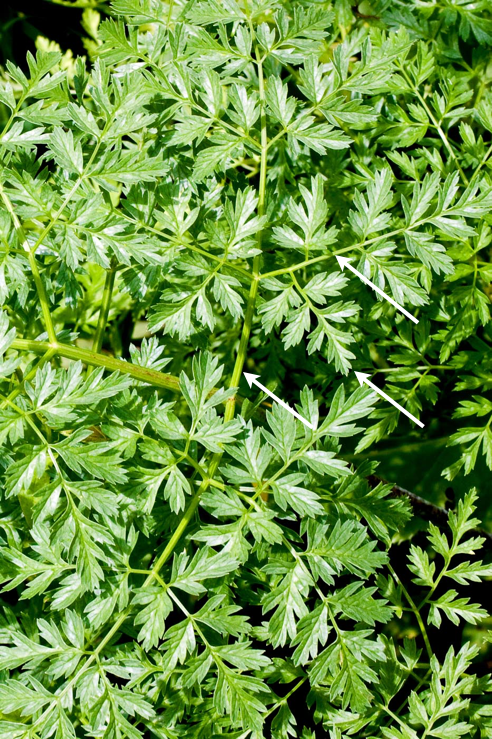
LEAVES: Alternate. Blades 8–16 inches long, pinnately compound, usually divided 2–4 times; leaflets glossy green, oval, divided parsley-like, deeply toothed, 1/4–3/8 inch (4–10 mm) long.
HABITAT: Stream and ditch banks, wetlands, disturbed areas; moist soils.
ELEVATION: 4,000–9,000 feet.
RANGE: Naturalized throughout the west and mid-west to the Atlantic.
SIMILAR SPECIES: Water Hemlock, Cicuta maculata, has compound but not parsley-like leaves. Oshá, Ligusticum porteri, does not have stems with purple spots, or tiny leaf-like bracts beneath the smaller flowering umbels. The flowers of Hemlock Parsley, Conioselinum scopulorum, have long, slender bractlets beneath the terminal umbels. Parsnip, Pastinaca sativa, has yellow flowers.
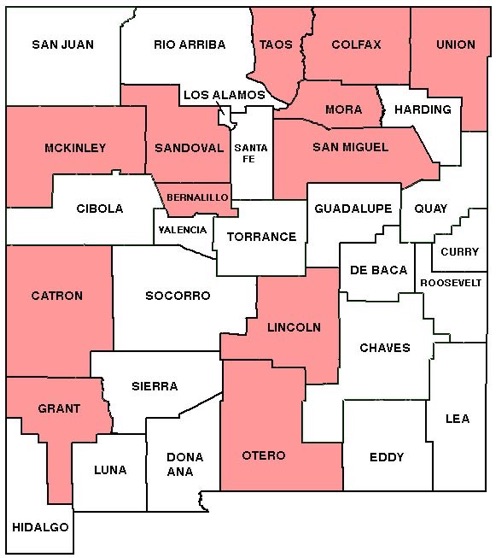
NM COUNTIES: Scattered across NM in mid- to high-elevation, moist habitats: Bernalillo, Catron, Colfax, Grant, Lincoln, McKinley, Mora, Otero, Sandoval, San Miguel, Taos, Union.