FETID GOOSEFOOT
DYSPHANIA GRAVEOLENS
Amaranth Family, Amaranthaceae (formerly Chenopodiaceae)
Annual herb
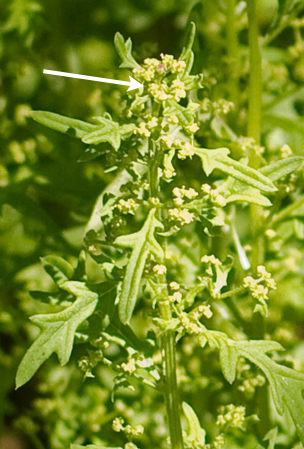
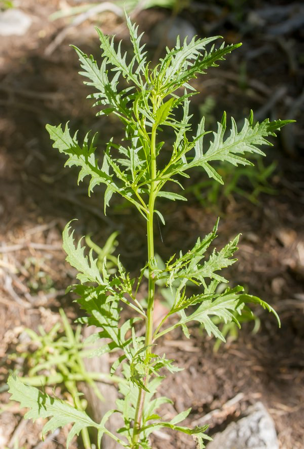
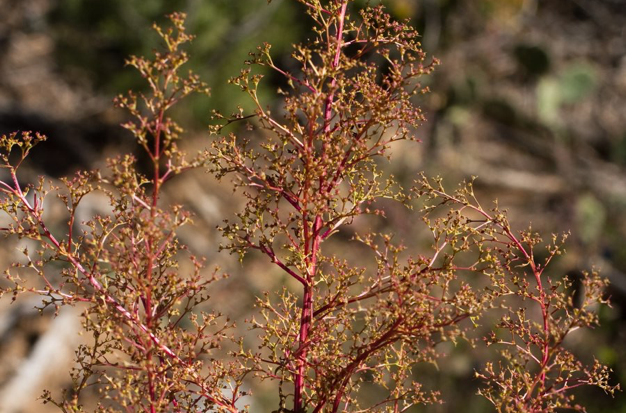
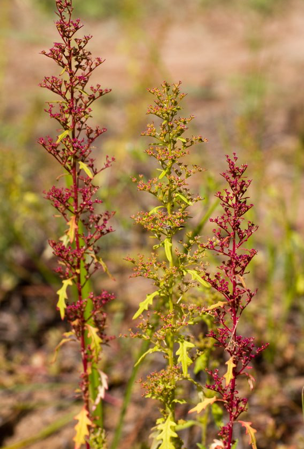
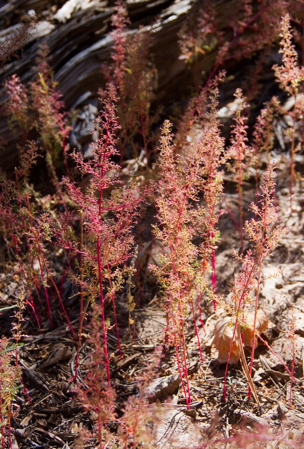
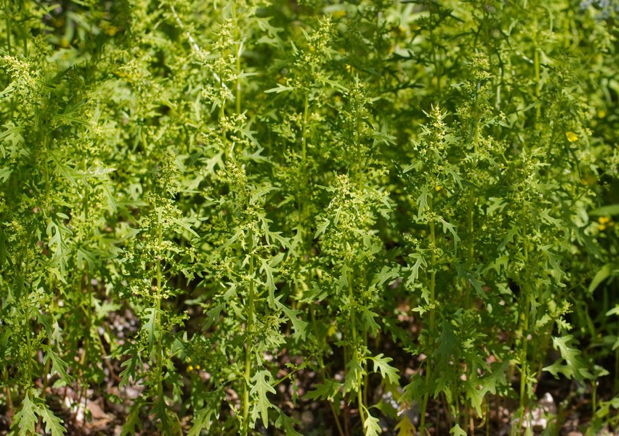
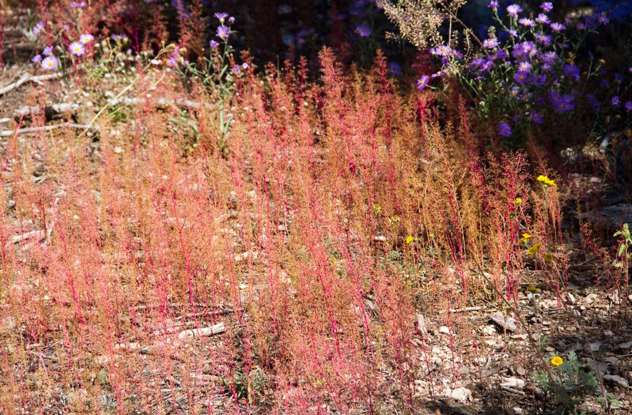
Erect, leafy stems of this aromatic herb reach 2 feet tall and form dense colonies in shaded openings of pine forests. Note the deeply cut leaves with pointed lobes, and the insignificant yellowish-green flower clusters in the leaf axils. The stem and branches turn bright red in the fall, often covering the forest floor with a blanket of vibrant color.
FLOWERS: August–September. Small, tight clusters of inconspicuous yellowish-green flowers in leaf and branch axils; petals absent.
LEAVES: Alternate. Blades lance-shaped to elliptic, 5/8–1 1/2 inches long (1.5–4 cm); margins deeply cut with pointed lobes with or without teeth; aromatic with yellow glands on the lower surface.
HABITAT: Sandy, rocky, loamy soils of open woodlands, mountain grasslands, meadows, shrublands, disturbed areas; piñon-juniper-oak, ponderosa pine, and Douglas-fir woodlands.
ELEVATION: 5,000–10,200 feet.
RANGE: AZ, CO, NM TX, UT.
SIMILAR SPECIES: Two introduced species widespread in NM: Epazote, D. ambrosiodes, from Mexico, has small, spiked flower clusters, and slender, entire to toothed (not lobed) leaves; Jerusalem-oak, D. botrys, from the Mediterranean, has oak-like, wavy-lobed leaves, and dense terminal flower clusters 4 3/4–9 1/2 inches long.
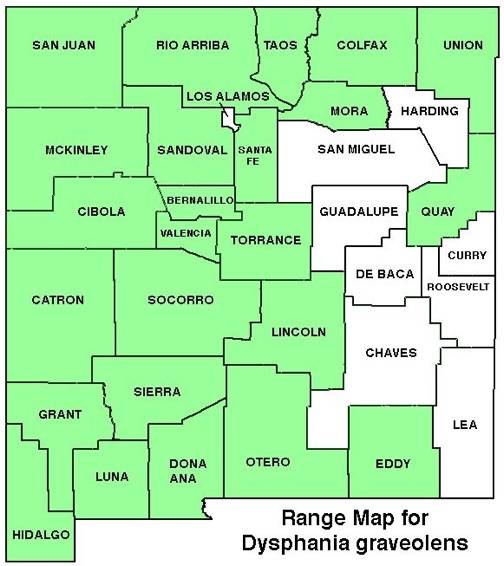
NM COUNTIES: Widespread in NM mountains from mid- to high-elevation habitats: Bernalillo, Catron, Cibola, Colfax, Dona Ana, Eddy, Grant, Hidalgo, Lincoln, Los Alamos, Luna, McKinley, Mora, Otero, Quay, Rio Arriba, San Juan, San Miguel, Sandoval, Santa Fe, Sierra, Socorro, Taos, Torrance, Union, Valencia.
Please note, this list of counties does not match the counties indicated on the range map below. We are in the process of generating new range maps and will update the range maps when able.