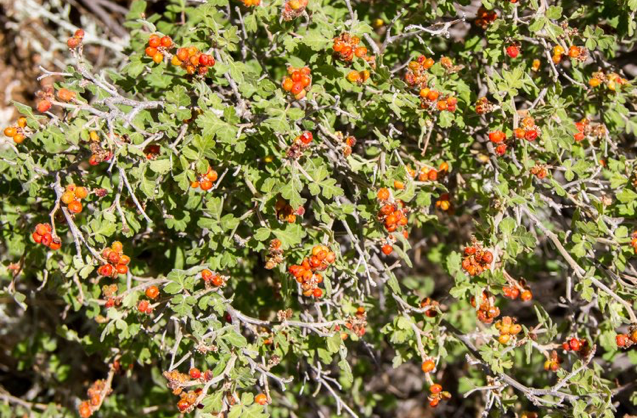
FRAGRANT SUMAC
RHUS AROMATICA (RHUS TRILOBATA)
Sumac Family, Anacardiaceae
Deciduous shrub
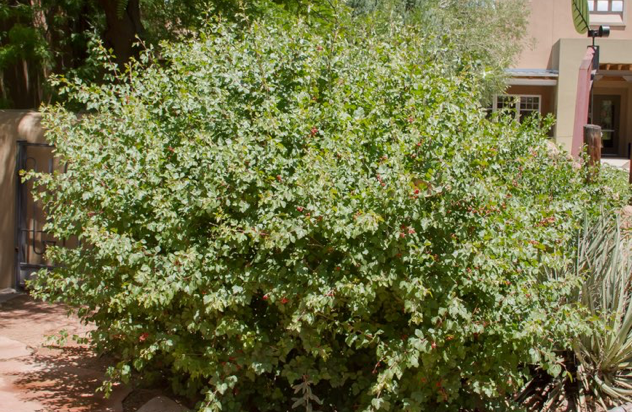
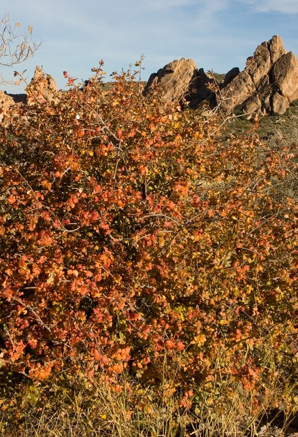
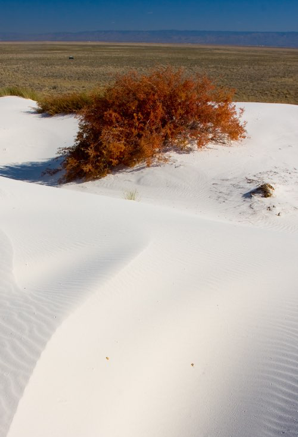
Upright shrubs 2–9 feet tall, averaging 4 feet tall and wide, have rounded to irregular branching and compound leaves with 3 leaflets. Note the tiny, creamy flowers appear before the leaves in the spring and produce reddish drupes, then the foliage turns hues of red in the fall. The combination of early nectar for bees, dense foliage for bird shelter, berries for summer food, and tidy, low-growing cultivars make this shrub popular in pollinator gardens and xeriscapes. Root suckers can form clonal colonies.
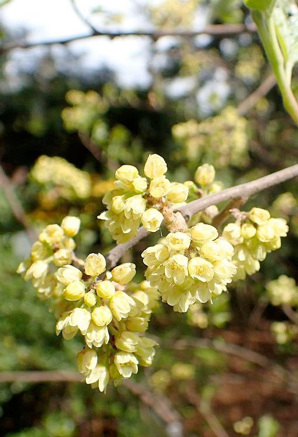
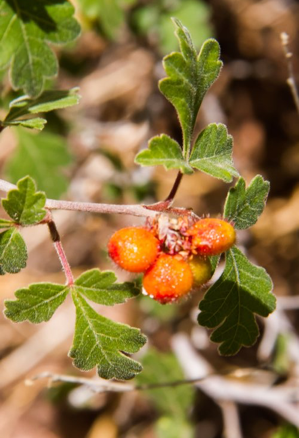
FLOWERS: March–April. Dense, spike-like clusters have small, pale-yellow flowers before leaves emerge. Male and female flowers are separate: male flowers 1 inch long (25 mm) catkins; female flowers have 5 petals 1/8 inch long (3 mm). Fruit a cluster of small, red to orange drupes 1/4 inch diameter (6 mm), sticky, hairy, citrus flavored.
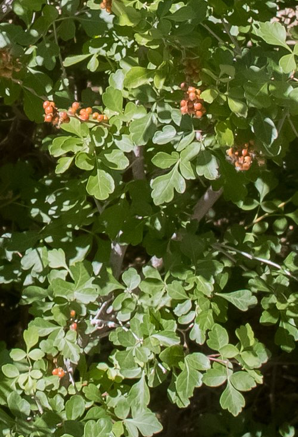
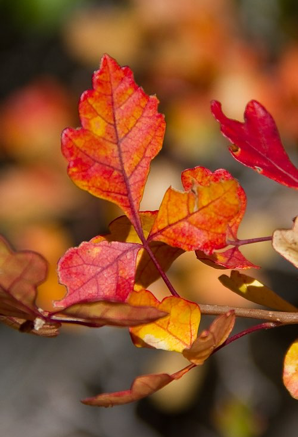
LEAVES: Alternate, stalked. Blades palmately compound with 3 leaflets, each 3/8–2 inches long (1–5 cm), 3-lobed, edges lobed to round-toothed, ill-smelling.
HABITAT: Coarse soils, slopes, washes, mesas, open woods, mountain scrub; desert grasslands and scrub, sage shrub lands, piñon-juniper woodlands, ponderosa pine and Douglas-fir forests.
ELEVATION: 3,800-9,600 feet.
RANGE: Nearly nationwide; Canada to Mexico.
SIMILAR SPECIES: Evergreen Sumac, R. virens, in southern NM has compound leaves with 3–9 elliptical leaflets. Western Poison Ivy, Toxicodendron rydbergii, widespread, has 3 large, elliptical leaflets and white fruit.
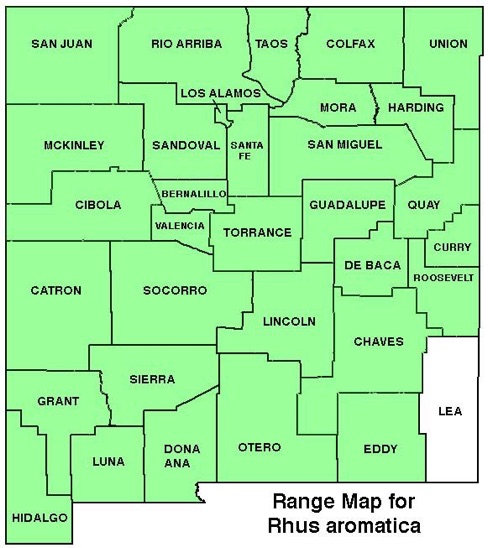
NM COUNTIES: Widespread, common, nearly statewide (absent Lea Co.) in mid-elevation, dry habitats.