SMOOTH SUMAC
RHUS GLABRA
Sumac Family, Anacardiaceae
Deciduous shrub to small tree
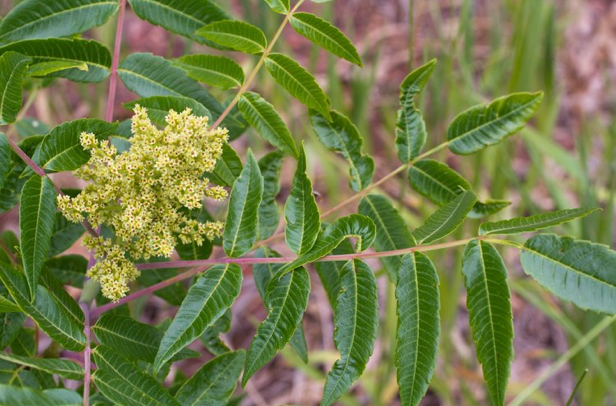
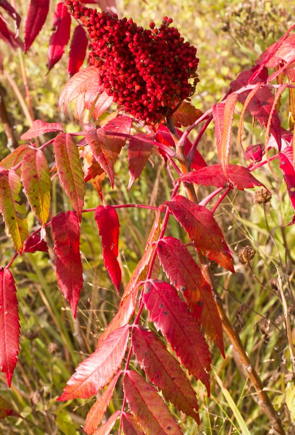
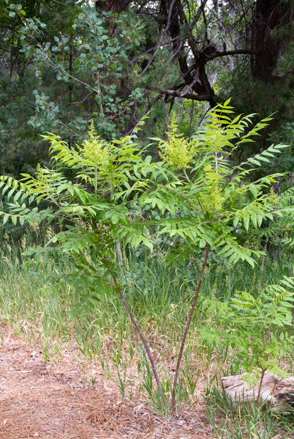
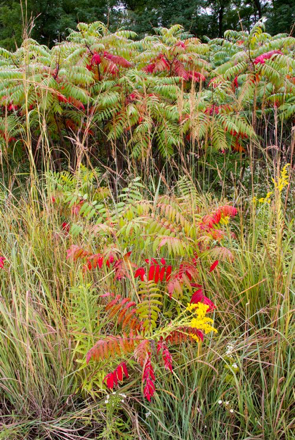
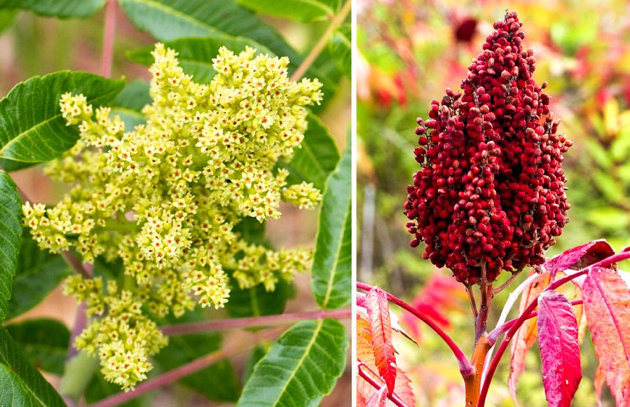
Reaching 3–10 feet tall (1–3 m) usually with a single trunk and upper branching, this vigorously thicket-forming plant has pinnately compound leaves with large leaflets that turn red in the fall. Note the dense pyramidal clusters of small, creamy flowers followed by small, round red fruit; sap is milky, yellowish.
FLOWERS: June–August. Dense, erect pyramidal clusters 4–10 inches long (10–25 cm) form on branch tips; flowers 1/8 inch long (3 mm) with 5 creamy to greenish-white petals; male and female flowers on separate plants (dioecious). Fruit in dense, erect clusters, drupes fleshy, 1/4 inch diameter (6 mm), bright red, densely glandular-hairy; clusters persist into winter.
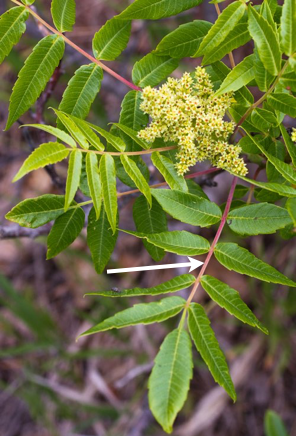
LEAVES: Alternate, pinnately compound, stalkless (sessile). Blades have 13–19 lance-shaped leaflets 1 1/2–4 inches long (4–10 cm) by 3/8–1 inch wide (10-25 mm); the main stalk of the leaf (rachis) does not have wings between the leaflets; edges vary from nearly entire to coarsely toothed; surfaces hairless, green above, whitish below; base rounded, tips tapered; turns bright hues of red in autumn.
HABITAT: Sandy, rocky soils, slopes, canyons, floodplains, open areas, roadsides; sagebrush, piñon-juniper, ponderosa pine-oak forests.
ELEVATION: 5,400–8,700 feet.
ELEVATION: 5,400–8,700 feet.
SIMILAR SPECIES: Prairie Sumac, R. lanceolata (infrequent in Doña Ana, Eddy, other Cos.) has wings on the rachis between the leaflets.
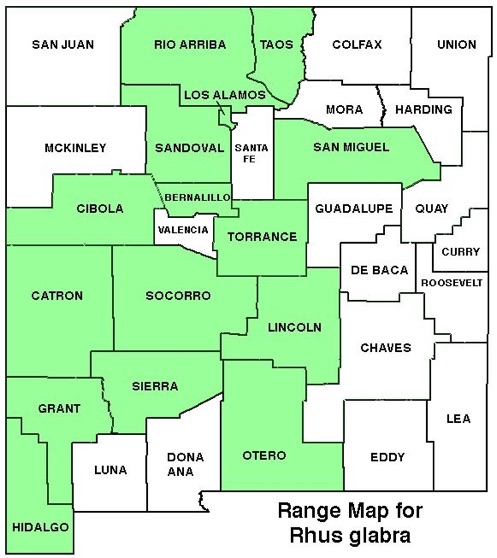
NM COUNTIES: Widespread, common in western half of NM in mid-elevation habitats: Bernalillo, Cibola, Catron, Grant, Hidalgo, Lincoln, Los Alamos, Otero, Rio Arriba, San Miguel, Sandoval, Sierra, Socorro, Taos, Torrance.