LITTLELEAF SUMAC
RHUS MICROPHYLLA
Sumac Family, Anacardiaceae
Deciduous shrub
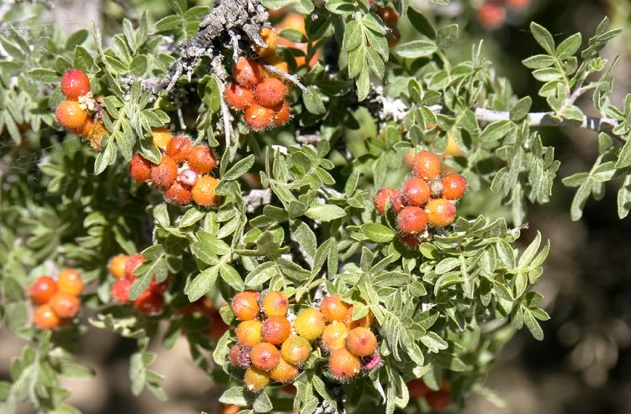
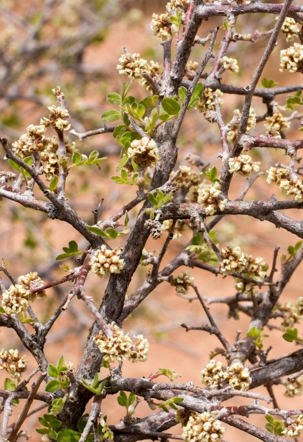
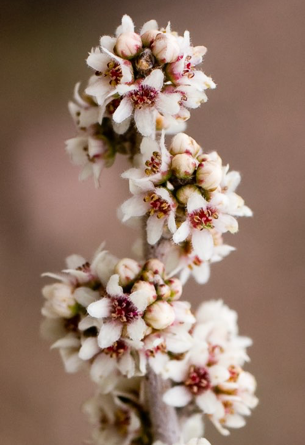
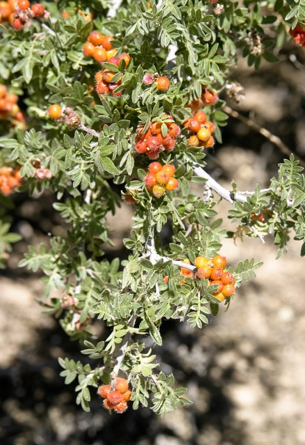
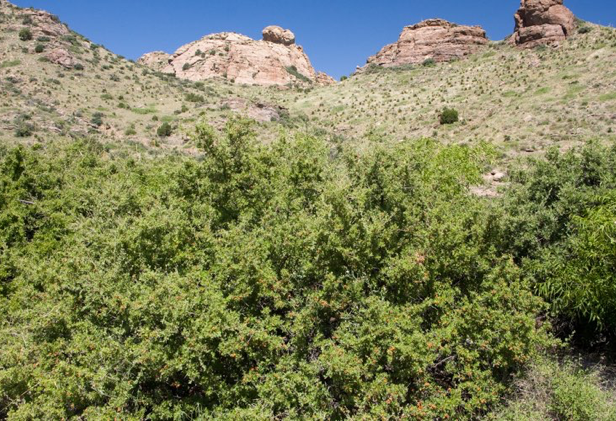
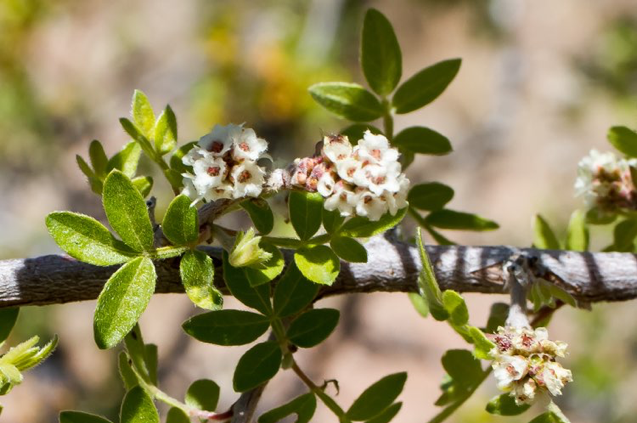
Rounded shrubs with dense, stiff, pointed branches reach 4–16 feet tall and wide (1–5 m) with pinnately compound leaves with small leaflets. Note the clusters of creamy white flowers bloom as the leaves emerge, and the fruit is a small, red, rounded, hairy drupe. Popular in xeriscape and pollinator gardens; can be pruned into a small tree or hedge.
FLOWERS: March–May. Dense terminal and auxiliary clusters have flowers with 5 cream to white, hairy petals 1/16 inch long (1.5–2.5 mm); male and female flowers on separate plants (dioecious). Fruit a fleshy drupe, 1/4 inch diameter (6 mm), red to orange, densely glandular-hairy; persist into winter.
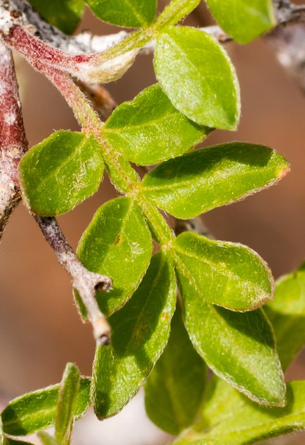
LEAVES: Alternate, pinnately compound. Blades have 5–9 leaflets, elliptic, 1/4–3/8 inch long (6–10 mm) by 1/16–3/16 inch wide (2–5 mm); the main stalk of the leaf (rachis) has wings between the leaflets; edges entire, surfaces short-hairy.
HABITAT: Gravelly, sandy soils, washes, canyons, hills, slopes; desert scrub, mesquite grasslands, piñon-juniper woodlands.
ELEVATION: 2,900-6,900 feet.
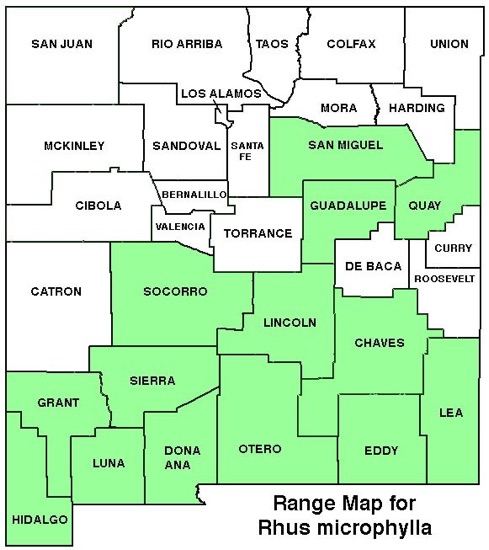
RANGE: AZ, NM, OK, TX; Mexico.
SIMILAR SPECIES: Evergreen Sumac, R. virens, in southern NM counties and west through central Texas, has 3–9 leathery, evergreen leaflets, and a rachis without wings.
NM COUNTIES: Widespread in southern half of NM in low- to mid-elevation, arid habitats: Chaves, Doña Ana, Eddy, Grant, Guadalupe, Hidalgo, Lea, Lincoln, Luna, Otero, Quay, San Miguel, Sierra, Socorro.