TUMBLEWEED, RUSSIAN THISTLE
SALSOLA TRAGUS (SALSOLA KALI)
Amaranth Family, Amaranthaceae (formerly in the Chenopodiaceae)
Annual subshrub; introduced, invasive
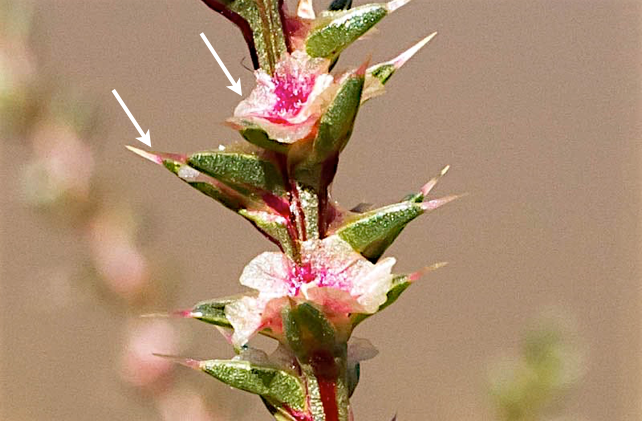
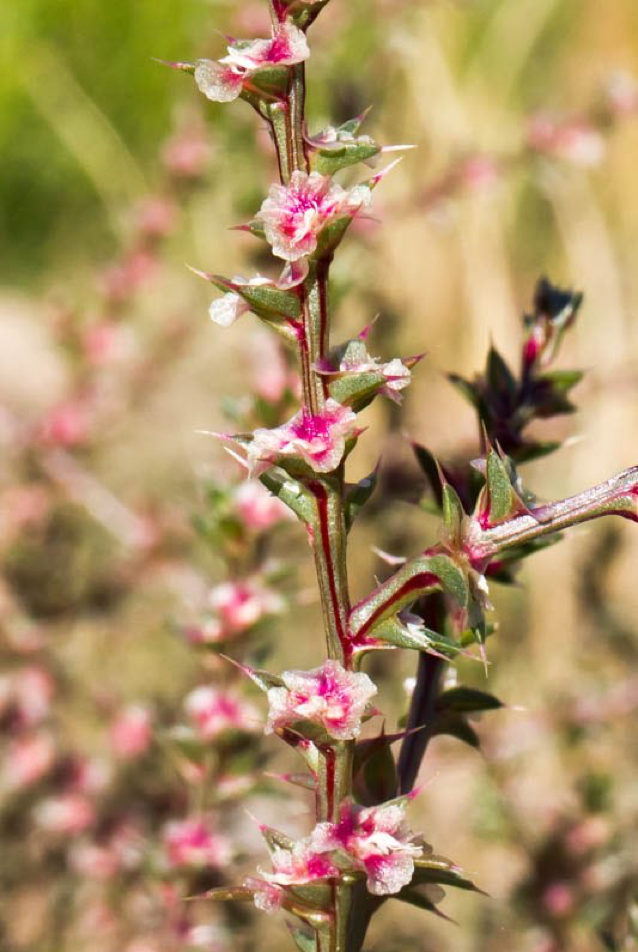
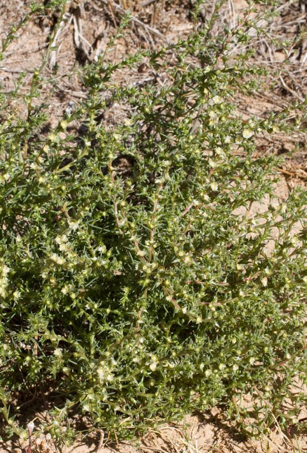
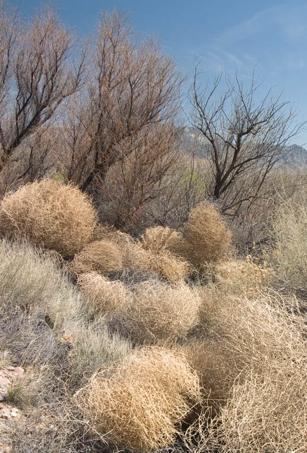
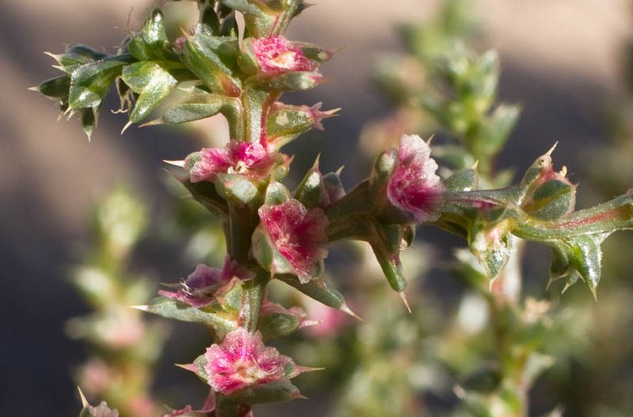
This noxious alien from Europe, first documented in the U.S. in 1870, found heaven on Earth in the overgrazed, abused pastures and prairies of the West. It quickly spread a prickly blanket across countless acres of degraded range and farmland. In the winter, the dried “bushes” can reach 3 feet across and accumulate in huge, wind-blown, prickly piles on the windward side of fences, gullies, and buildings. Note the rounded shape from the dense, interlocking branches, the reddish stripes on fresh stems, and the tiny dish-like pinkish flowers in the leaf axils.
FLOWERS: July–October. Solitary in upper leaf axils, 3 spiny green bracts spread beneath 5 pinkish petal-like sepals, each oval, 1/8 inch long (3 mm); no petals.
LEAVES: Alternate. Blades threadlike, 3/8–2 inches long (1–5 cm), becoming rigid, spine-tipped.
HABITAT: Dry sandy, disturbed soils; roadsides, abandoned farms, range lands.
ELEVATION: 3,500–8,000 feet.
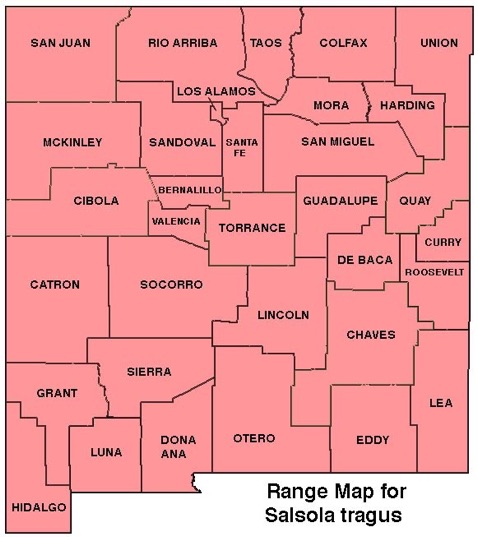
RANGE: Widespread across the U.S.; in every state west of the Mississippi River.
SIMILAR SPECIES: The look-alikes Slender Russian Thistle, S. collina, and Barbwire Russian Thistle, S. paulsenii, share much of the same range in NM and the Southwest.
NM COUNTIES: Widespread statewide in low- to mid-elevation, dry habitats.